
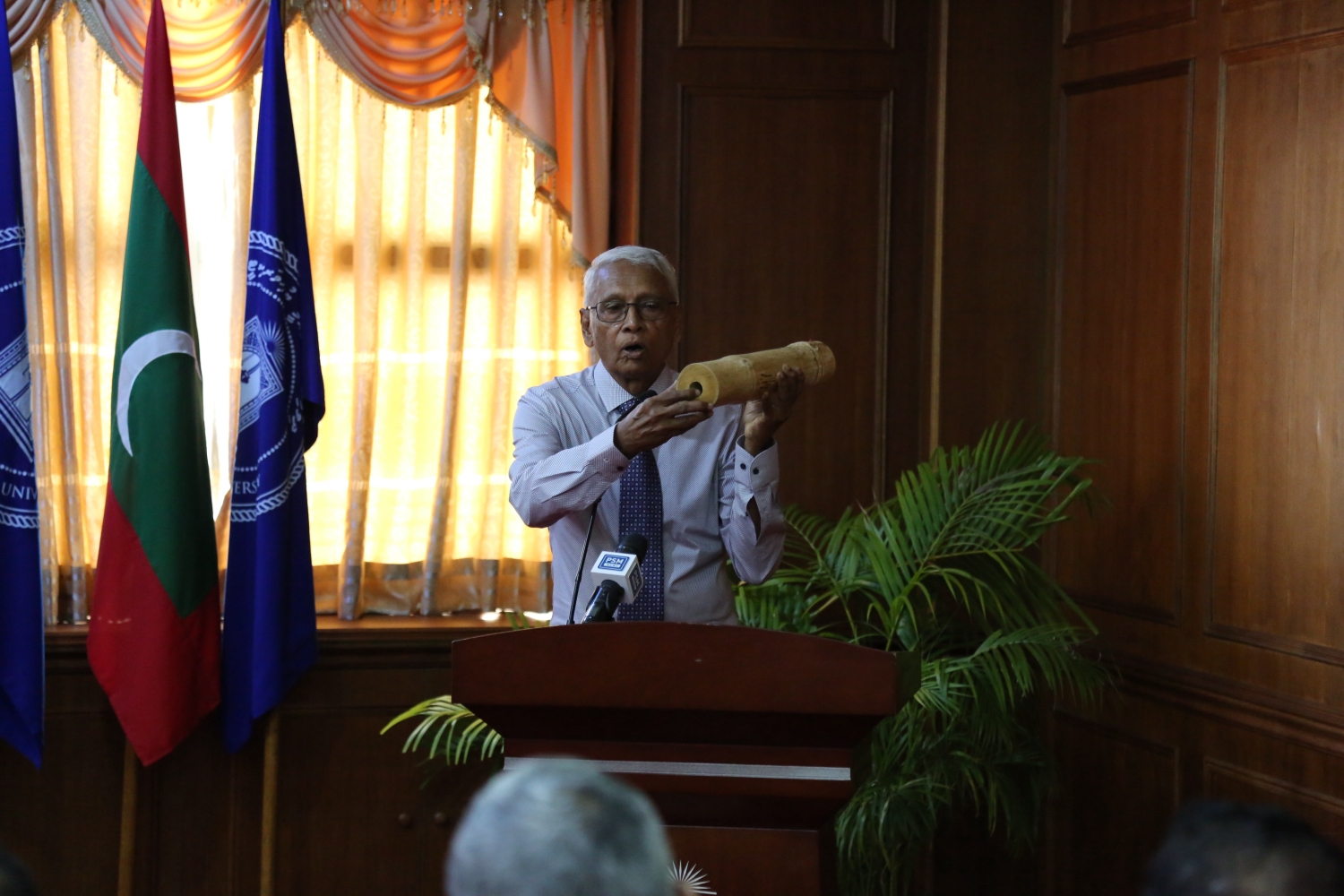
A partnership between Atmosphere Foundation and the Maldives National University is bringing scientific research into the Foundation’s growing Bamboo for Climate Change Mitigation Project.
The collaborative study, titled Bamboo Plant Identification and its Ecological Impact in the Maldives, examines bamboo varieties already growing in the country as well as those introduced through recent cultivation efforts. It is the first dedicated study of its kind in the Maldives, establishing a local body of knowledge on how bamboo grows and interacts with island environments.
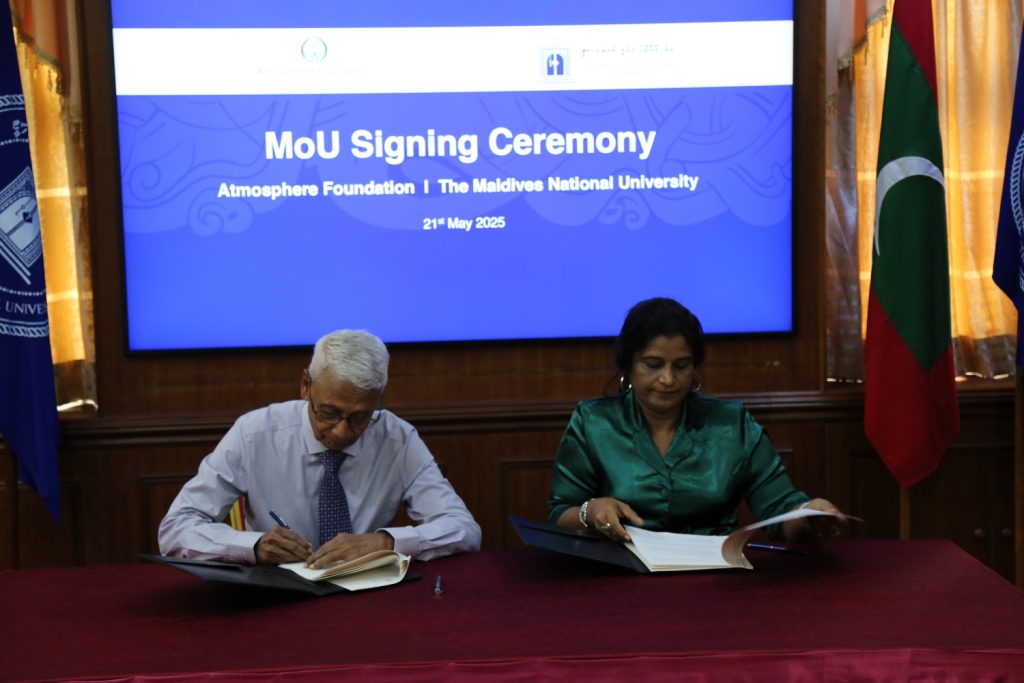
The Maldives National University and Atmosphere Foundation formalised the partnership through a Memorandum of Understanding signed in May 2025 at MNU’s central campus in Malé. Vice Chancellor Dr Aishath Shehenaz Adam signed on behalf of the University, while Mr Abdul Azeez Abdul Hakeem, Deputy President of Atmosphere Foundation, joined virtually to officiate the agreement on behalf of the Foundation. MNU’s announcement identifies three principal areas of research: species identification and classification, morphological analysis and the assessment of bamboo’s effects on soil.
Researchers will study bamboo found across different islands and habitats. Morphological analysis will examine the observable characteristics of each variety, helping researchers understand how the plants grow and develop under different environmental conditions. The soil component will explore how bamboo cultivation affects soil quality, an important consideration when assessing its long-term suitability for Maldivian islands.
According to MNU, the findings are expected to inform sustainable bamboo management and contribute to biodiversity conservation. They could also provide an evidence base for determining which varieties are best suited to particular island conditions, rather than approaching cultivation as a single model for every location.
From planting to research
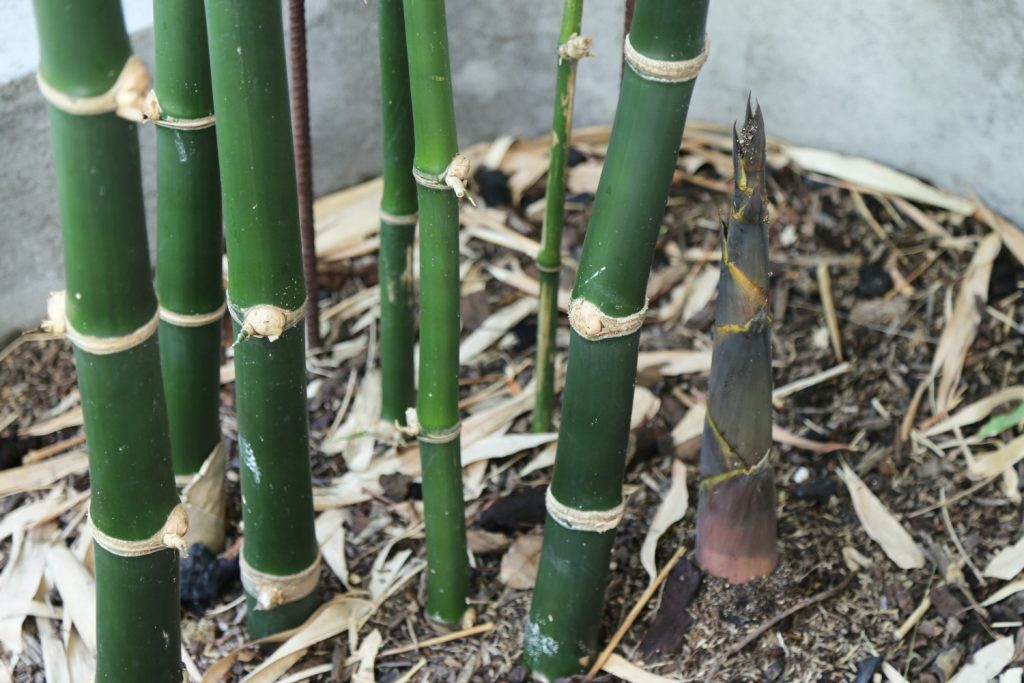
The study builds on the Bamboo for Climate Change Mitigation Project launched by Atmosphere Foundation in 2023. Since then, more than 4,000 bamboo plants have been nurtured and distributed across approximately 30 locations in the Maldives.
One of the project’s main sites is HDh. Vaikaradhoo Bamboo Park. The park holds 13 bamboo varieties, making it the most diverse bamboo collection recorded in the country. Bamboo has also been planted by the Atmosphere Foundation including B. Goidhoo, giving researchers access to plants growing in different parts of the Maldives.
The Foundation has also worked with agricultural scientist Dr Bharati Nambi to guide planting practices and support the productive cultivation of bamboo. The research partnership with MNU takes this work further by connecting cultivation in the field with formal scientific assessment. The wider initiative has included the distribution of 500 seedlings through government ministries to islands and industrial locations.
Exploring its wider potential
Bamboo has potential applications beyond planting. Once suitable varieties and cultivation methods have been identified, it may offer opportunities for locally made products and income-generating activities. Its versatility could make it useful as a renewable material, while carefully managed cultivation may support broader environmental objectives.
The project is also exploring a bamboo variety, Bamboosa Balcooa with thicker culm walls and a smaller hollow section. Its greater volume of plant material may offer increased potential for storing carbon, although the extent of this benefit will need to be established through scientific assessment.
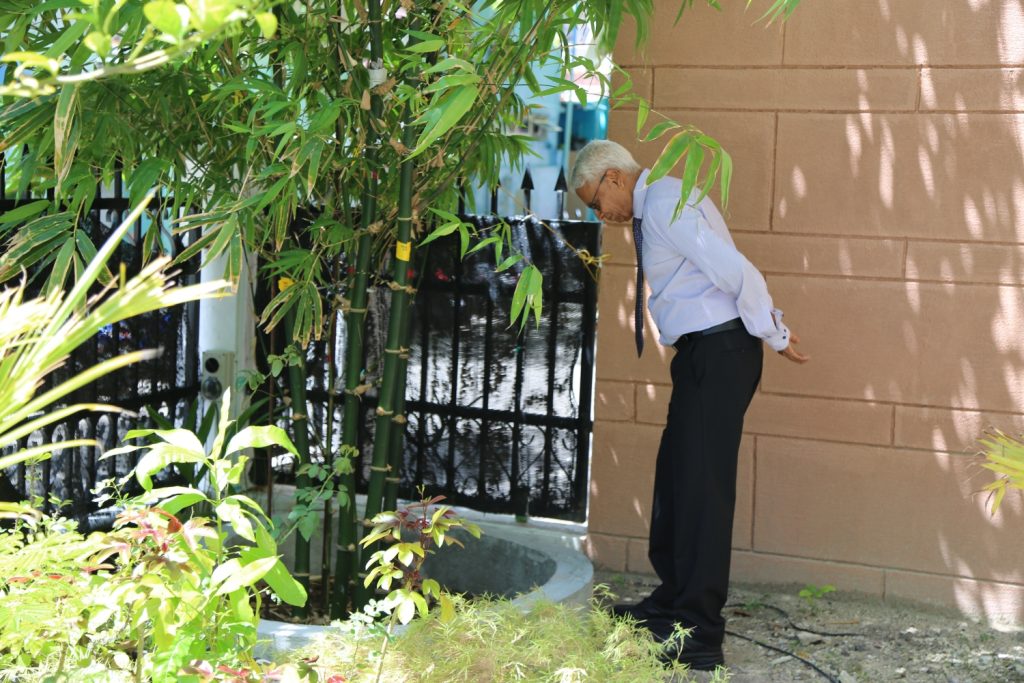
For the Maldives, the research represents an important shift from planting bamboo based on its general environmental promise to studying how it performs within the country’s specific conditions. The findings will help determine which varieties thrive, how they influence the soil and how cultivation can be managed responsibly.
Through the partnership, Atmosphere Foundation’s on-the-ground programme and MNU’s research expertise come together to create a stronger foundation for future decisions. The study will help establish whether bamboo can become a practical environmental and economic resource for the Maldives, supported by local evidence and adapted to the realities of island ecosystems.